
HR 1 Does Not Block States From Offering Medicaid And CHIP To Lawfully Residing Children And Pregnant Women
By Kelly Whitener / July 20, 2026
If all states adopt the Immigrant Children’s Health Improvement Act in the next few months, more lawfully residing immigrant children and pregnant women, such as refugees, could retain their Medicaid/CHIP coverage beyond October 2026.
The Budget Reconciliation Law passed in July 2025 (hereinafter H.R. 1) dramatically limits Medicaid and Children’s Health Insurance Program (CHIP) eligibility for noncitizens beginning October 1, 2026. Due to the prevalence of misleading information circulating about Medicaid, it is worth noting that undocumented immigrants have never been eligible for full Medicaid coverage. H.R. 1 placed further restrictions on access to Medicaid for lawfully residing immigrants; however, states retain the option to cover lawfully residing immigrant children and pregnant women without a five-year waiting period through the Immigrant Children’s Health Improvement Act (ICHIA) option, enacted as Section 214 of the Children’s Health Insurance Program Reauthorization Act of 2009 (CHIPRA, P.L. 111-3).
ICHIA is a popular, bipartisan state option; nearly three-quarters of states have adopted it for children, and almost two-thirds have done so for pregnant women. If all states adopt ICHIA for both groups in the next few months, more lawfully residing immigrant children and pregnant women, such as refugees, could retain their Medicaid/CHIP coverage beyond October. As explained in more detail below, there may be some confusion about this because earlier versions of H.R. 1 would have penalized states for adopting ICHIA.
Background
Medicaid is a means-tested, federal-state program with five broad eligibility requirements: categorical, income, resource, immigration status, and state residency. Citizens who meet Medicaid’s financial and non-financial eligibility requirements are eligible for Medicaid coverage, but for immigrants, Medicaid eligibility is much more complex. Undocumented immigrants have never been eligible for full Medicaid coverage, although they may qualify for emergency medical care if they meet all other financial and non-financial requirements.
Since 1996, Medicaid eligibility for lawfully present immigrants has been governed by the Personal Responsibility and Work Opportunity Reconciliation Act (P.L. 104-193), which created a list of “qualified immigrants” eligible for federal public benefits, including Medicaid, although many “qualified immigrants” must have such status for five years before becoming eligible for Medicaid. Lawfully present immigrants with a status not on the “qualified” list are ineligible for full Medicaid but, like undocumented immigrants, may qualify for emergency medical care. CHIP’s immigration status requirements mirror Medicaid’s.
Immigrant Children’s Health Improvement Act
Since 2009, under the ICHIA option, enacted as Section 214 of CHIPRA, states have the option to provide Medicaid and CHIP coverage to lawfully residing children (up to age 21 in Medicaid, age 19 in CHIP) and pregnant women, without requiring them to complete the five-year waiting period. Thus, adopting ICHIA has two primary affects: broadening the group of eligible statuses beyond the “qualified immigrants” list to all those children/pregnant women who are lawfully residing and waiving the five-year waiting period. States receive the higher CHIP match for children who gain coverage as a result of adopting ICHIA even if they are covered through Medicaid; pregnancy coverage under ICHIA is matched at the state’s regular Medicaid match. As of January 2026, 38 states have adopted ICHIA for children in Medicaid, and 20 of 29 have done so for children in separate CHIP programs. For pregnant women, 32 states have adopted the option in Medicaid, as well as in six of seven states that have opted to expand CHIP to cover pregnant adults.
H.R. 1
Rather than relying on the “qualified” structure set forth in the Personal Responsibility and Work Opportunity Reconciliation Act, H.R. 1 limits federally funded Medicaid and CHIP eligibility for noncitizens to three groups: lawful permanent residents (LPRs, or green card holders), Cuban and Haitian entrants, and people residing in the US under Compact of Free Association status (citizens of the Marshall Islands, Micronesia, and Palau). This leaves a long list of immigrants who entered the country legally, and continue to have lawful status, who stand to lose Medicaid/CHIP eligibility beginning October 1, 2026, including refugees, asylees, and victims of trafficking or domestic violence. The Congressional Budget Office estimated this provision would reduce federal spending by $6.2 billion over 10 years and increase the number of uninsured people by about 1000,000 in 2034. Other reports indicate this could be an underestimate: The California Legislative Analyst’s Office estimated 2000,000 Californians enrolled in Medi-Cal would lose benefits due to H.R. 1’s narrowed eligibility rules.
Fortunately, lawfully residing immigrant children and pregnant women can preserve their Medicaid/CHIP coverage in states that have adopted ICHIA. Earlier versions of the budget reconciliation law would have penalized states for adopting ICHIA, although this seems to have been unintentional and the final language of H.R. 1 fixed the issue. States that have adopted ICHIA already will be able to continue to cover children and pregnant women who are refugees or asylees or have other lawful statuses who would otherwise lose Medicaid/CHIP in October. But families and health care providers may not be aware that this coverage option continues to apply, especially given other policy changes that restrict access to benefits for immigrant populations such as President Donald Trump’s executive order Ending Taxpayer Subsidization of Open Borders, Federal Register notice Personal Responsibility and Work Opportunity Reconciliation Act of 1996 (PRWORA); Interpretation of “Federal Public Benefit,” and Federal Register notice of proposed rulemaking Public Charge Ground of Inadmissibility.
Protecting ICHIA From Inadvertent Errors In State Legislation And Administration
States are not required to draft legislation to implement H.R. 1, but many states are doing so. However, state lawmakers must use caution when drafting legislation to implement H.R. 1 to ensure that the bill does not accidentally eliminate ICHIA while attempting to align with the federal law. Earlier drafts of Florida’s H.R. 1 implementation bill, HB 693, would have eliminated ICHIA in the state, but Florida lawmakers fixed the issue before passing the bill. In North Carolina, the H.R. 1 implementation bill, SB 696, limited Medicaid/CHIP eligibility to those immigrants whose coverage is “required” by federal law, jeopardizing ICHIA coverage for children and pregnant women in the state, although some lawmakers asserted eliminating ICHIA was not their intent, and they successfully fixed the issue in the state’s budget bill.
Even in states without H.R. 1 implementation legislation concerns, the process to maintain coverage for lawfully residing children/pregnant women may not happen automatically. A recent publication from the National Health Law Program and National Immigration Law Center describes the key steps states need to take to ensure a smooth transition, such as carefully screening people at application or renewal for all eligibility pathways before making a determination and providing clear guidance in notices to families.
Nearly Half Of States Could Preserve Coverage For Lawfully Residing Immigrant Children And Pregnant Women By Adopting ICHIA
States that have not adopted ICHIA, or have done so only partially, have an opportunity to take up this state plan option and preserve federally funded coverage. As of 2026, 21 states have some “room for improvement” on ICHIA. That is, they could preserve Medicaid/CHIP coverage for more lawfully residing children and pregnant women by taking up additional ICHIA options. For example, some states have adopted ICHIA but only for children or only for pregnant women. For ICHIA coverage to take effect by October 1 (thus avoiding a gap in eligibility for those groups otherwise slated to lose coverage under H.R. 1), states would need to submit a Medicaid state plan amendment (SPA) by December 2026. CHIP SPAs generally require prior approval, but states could temporarily adopt ICHIA without prior approval if needed (see exhibit 1).
Exhibit 1: State adoption of ICHIA
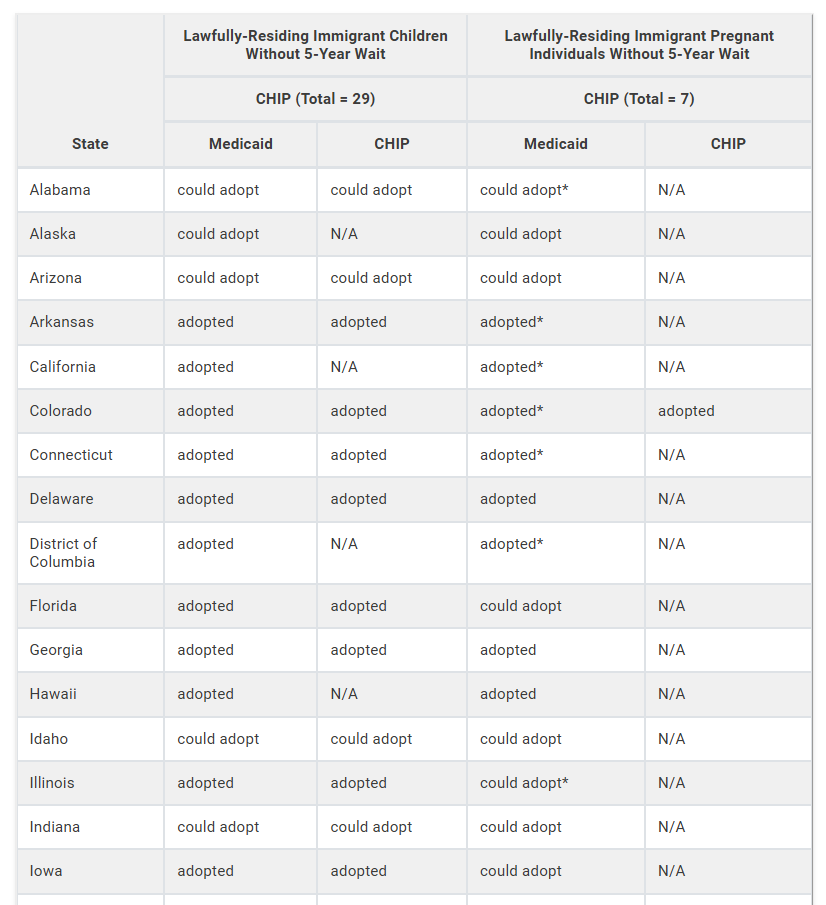
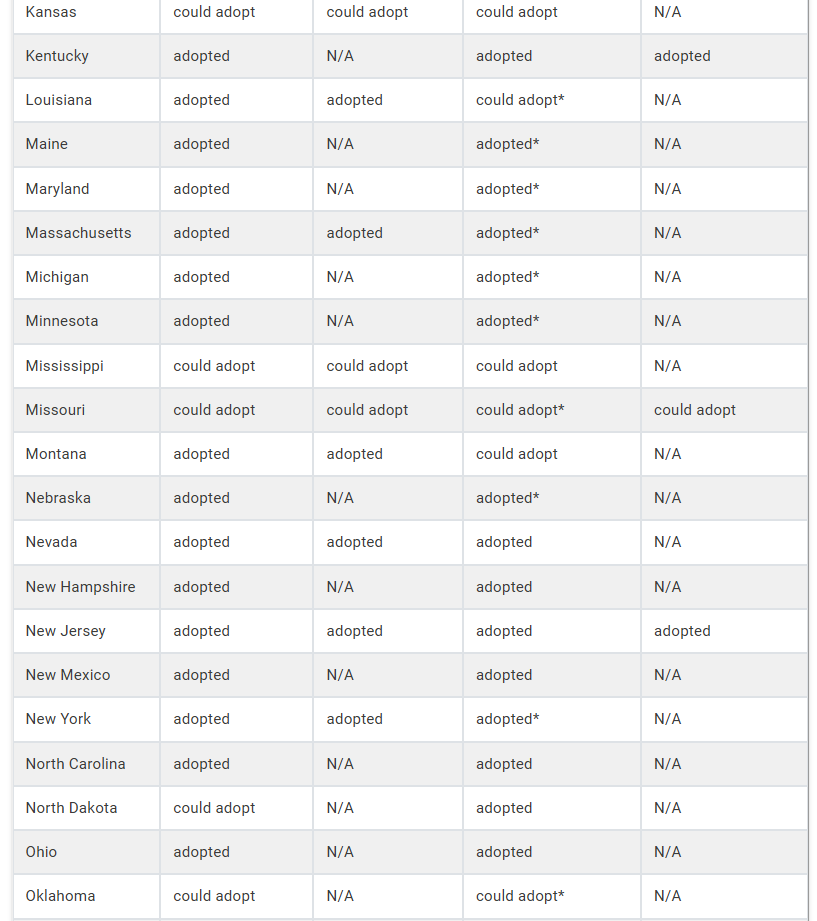
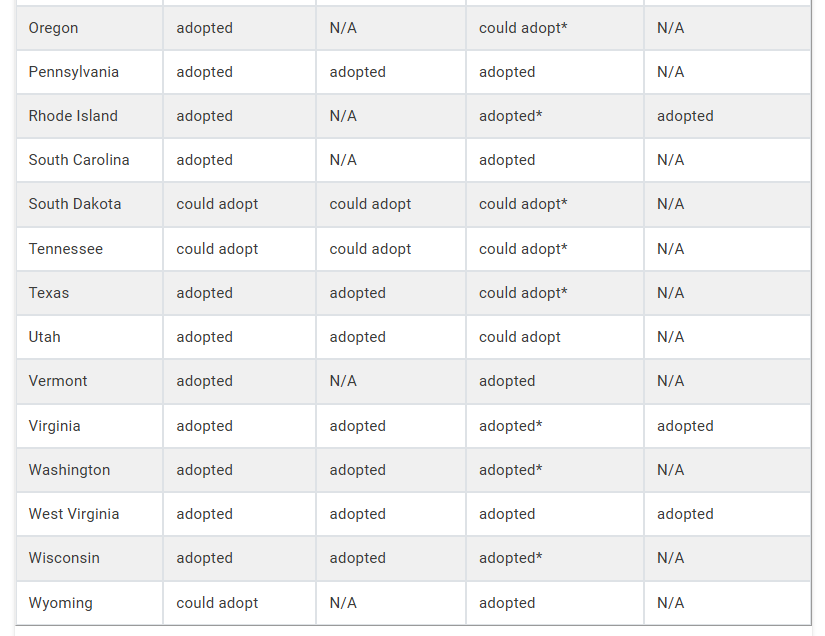
Source: Brooks T, Tolbert J, Mudumala A, Diana A, Yafimenka Y, Lin A. Medicaid and CHIP eligibility, enrollment, and renewal policies as state prepare for major Medicaid policy changes [Internet]. San Francisco (CA): KFF; 2026 Apr 30. Appendix Table 2: Medicaid and CHIP coverage for pregnant individuals and Medicaid family planning coverage, January 2026; Appendix Table 3: State adoption of federal options to cover immigrant populations, January 2026; [cited 2026 Jul 10].
Notes: N/A indicates the state does not have the applicable program (for example, the state has M-CHIP for children, and Medicaid rules apply, or the state does not cover pregnant women in the Children’s Health Insurance Program [CHIP]). An * denotes the state offers prenatal care through CHIP’s From Conception to End of Pregnancy (FCEP) option, which will also help preserve coverage for lawfully residing pregnant women, although adopting both the Immigrant Children’s Health Improvement Act (ICHIA) and the FCEP is a best practice. This is discussed in further detail in this Forefront article.
There is another CHIP-funded option states could adopt to preserve prenatal care for pregnant women, known as the From Conception to End of Pregnancy (FCEP) option (previously called “the unborn child option”). Under this option, states can cover “targeted low-income children” from conception to birth in CHIP, regardless of the pregnant person’s immigration status. The FCEP option allows states to cover prenatal care for a larger group of immigrants than the ICHIA pregnancy option, but it is harder to provide postpartum coverage under the FCEP option. Twelve months of postpartum coverage has rapidly become the norm in Medicaid, with Arkansas now the only state that limits postpartum coverage to 60 days. For ICHIA coverage, 12 months of postpartum care is automatically applied in the applicable states. But for FCEP coverage, federally funded postpartum care is limited to bundled payment arrangements such as a single payment for labor, delivery, and one postpartum visit or use of a CHIP Health Services Initiative to offer longer postpartum coverage periods. About half of states have adopted the FCEP option as of January 2026.Unfortunately, there are no federally funded options to preserve Medicaid/CHIP for adults who are not pregnant or to fill new gaps in coverage for lawfully residing immigrants who were previously eligible for Marketplace coverage or Medicare (even for those who have paid into the Medicare Trust Fund through payroll taxes). For these lawfully residing immigrants, states will have to use state-only funds to preserve coverage (as New Mexico and New York aim to do) or manage the consequences of an increase in the uninsured rate. But fully adopting ICHIA where shown in exhibit 1 is a readily available state option that would preserve federal funding at least for lawfully residing children and pregnant women.