Tracking Ohio Implementation of H.R. 1 Medicaid Work Reporting Requirements
By Georgetown Univeristy
Medicaid Enrollment Trends
North Dakota Medicaid Enrollment Data
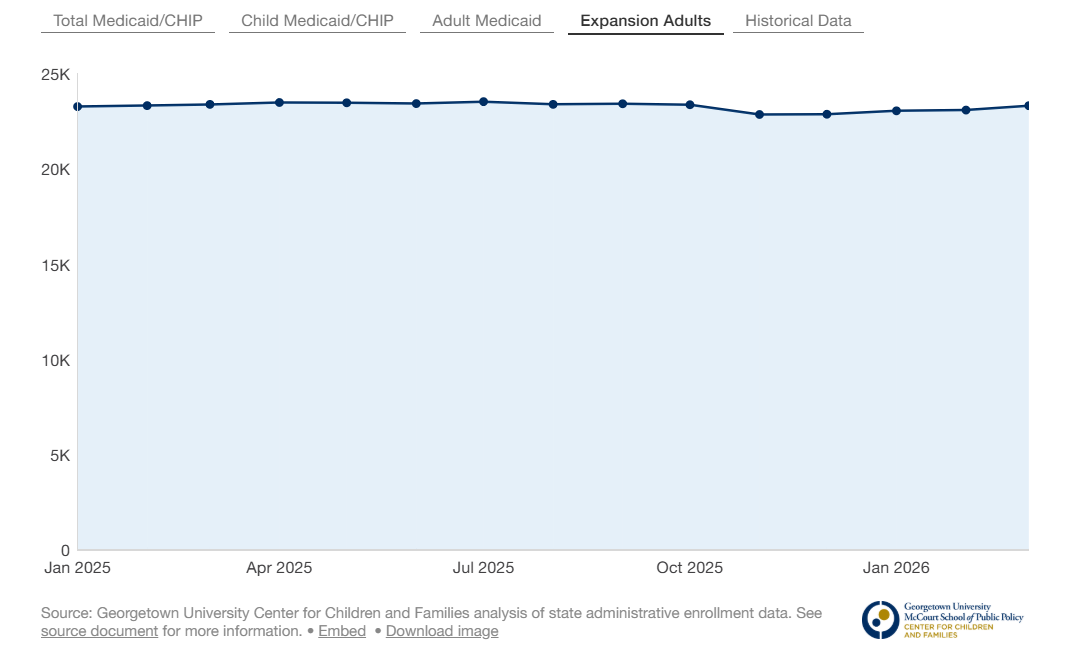
The CCF Enrollment Tracker uses the most recent monthly administrative data from state websites and the Centers for Medicare & Medicaid Services (CMS). State administrative data is often the quickest way to assess what is happening in a state’s Medicaid program.
Ohio posts monthly state administrative data, including Medicaid enrollment. Timely administrative data is useful for early identification of potential problems in administering eligibility and enabling rapid response before more people are impacted. Seeing rapid declines in enrollment, which we expect to see with implementation of work reporting requirements, won’t help identify the root of the problem. More detailed data disaggregated for the expansion population, including ex parte rates for verifying compliance or exemption, procedural disenrollments, and disenrollment reasons, are important for understanding what’s happening in a state’s systems and processes. Read more here about ways states can collect and report data to monitor implementation and impact of work reporting requirements.
Parents and Children
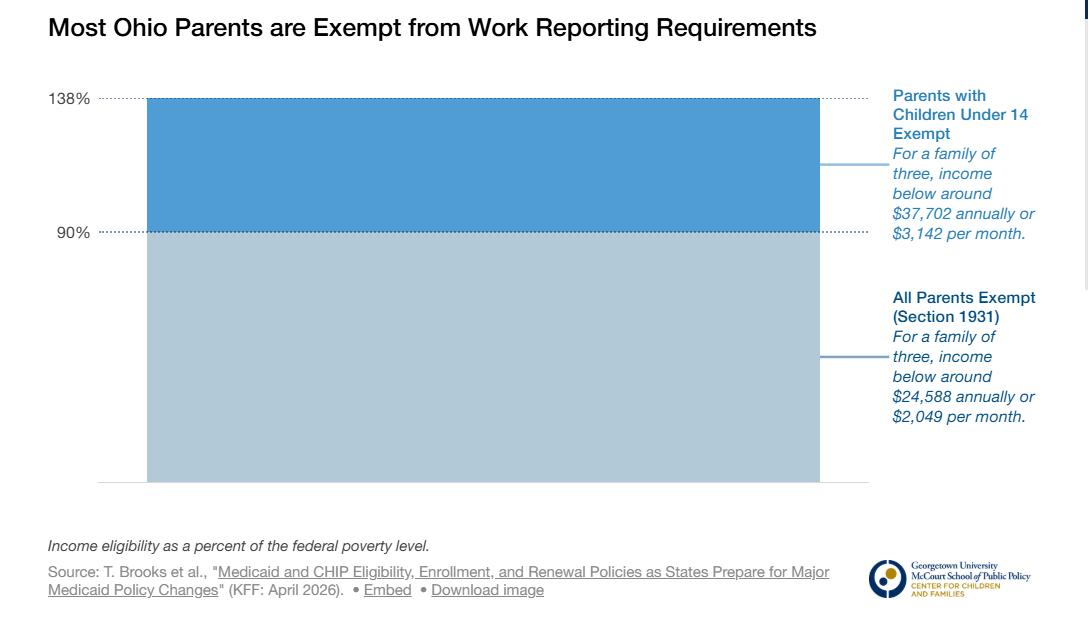
The overwhelming majority of parents should be exempt from work reporting requirements. Parents with income below the state’s “Section 1931” mandatory income eligibility level are not subject to work reporting requirements regardless of the age of their children. Section 1931 parents are a mandatory coverage group that all states must cover. Read more about this category here.
In Ohio, most parents with incomes below 90% of the poverty line are covered through the 1931 category (and therefore not subject to work reporting requirements). For a family of three, that’s an income below around $24,588 annually or $2,049 per month.
In addition to work requirements not applying to parents qualifying through 1931, H.R. 1 also exempts all parents and caretaker relatives with dependent children under age 14 from work reporting requirements if they qualify through Medicaid expansion. So all parents with a child under age 14 are exempt if their income is below 138% of the federal poverty line, whether they qualify by 1931 or by Medicaid expansion.
Additionally, any woman who is pregnant when she applies for Medicaid and becomes pregnant while covered by Medicaid is exempt from work reporting requirements. The exemption is extended through the entire postpartum period during which the woman is continuously eligible regardless of changes in circumstances. All states cover postpartum care for women whose pregnancy is covered by Medicaid for a full 12 months, except Arkansas.
Since many women in the adult expansion group become pregnant after enrolling, it will be critical for states to take steps to identify pregnant and postpartum women to ensure they receive continuous coverage and are excluded from work reporting requirements. Read more from CCF here about risks posed by H.R. 1’s new requirements for pregnant and postpartum women.
State Policy and Implementation Decisions
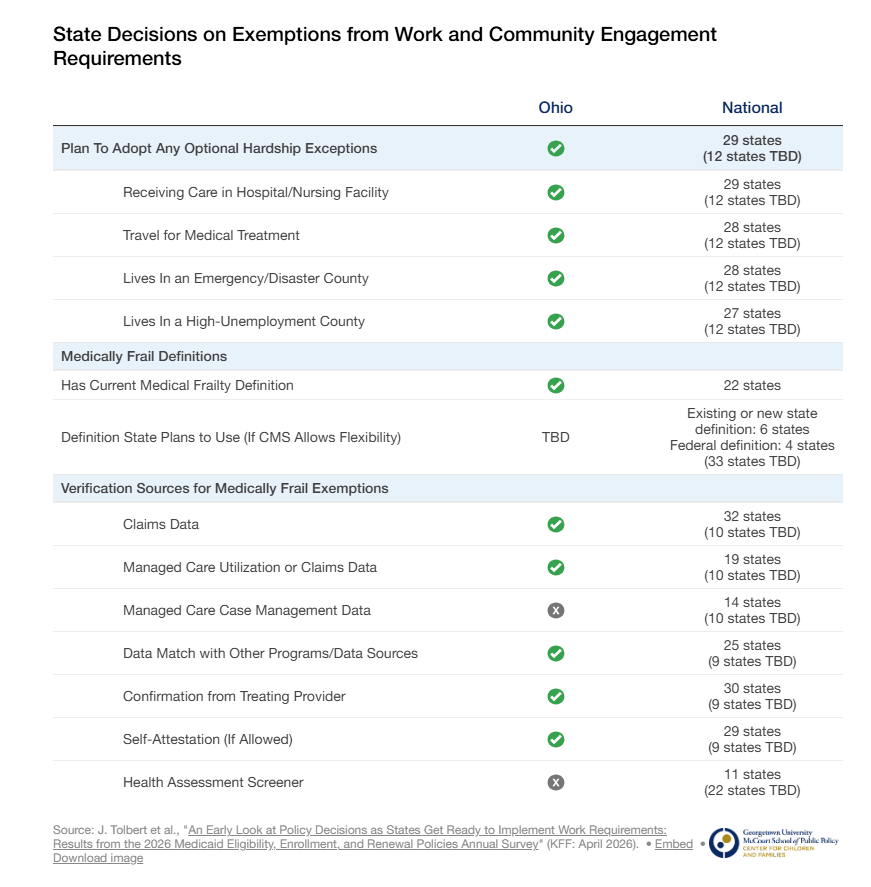
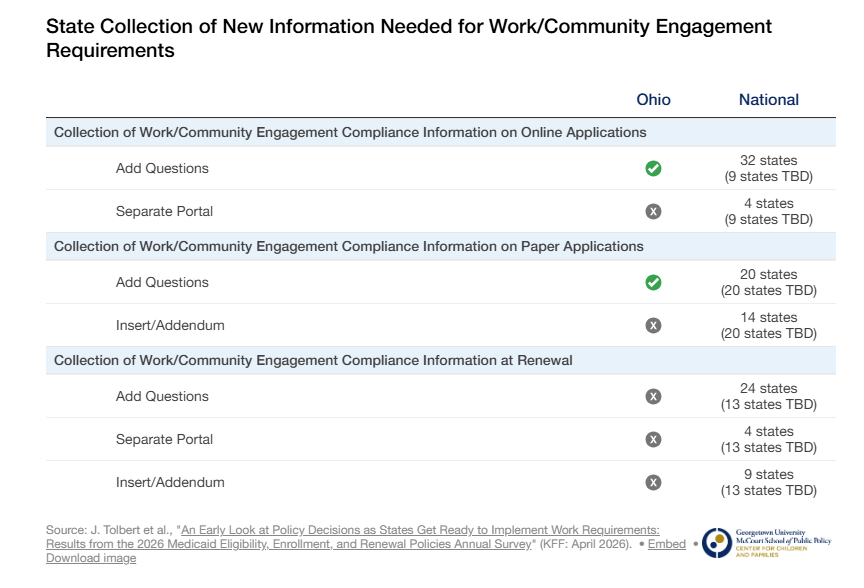
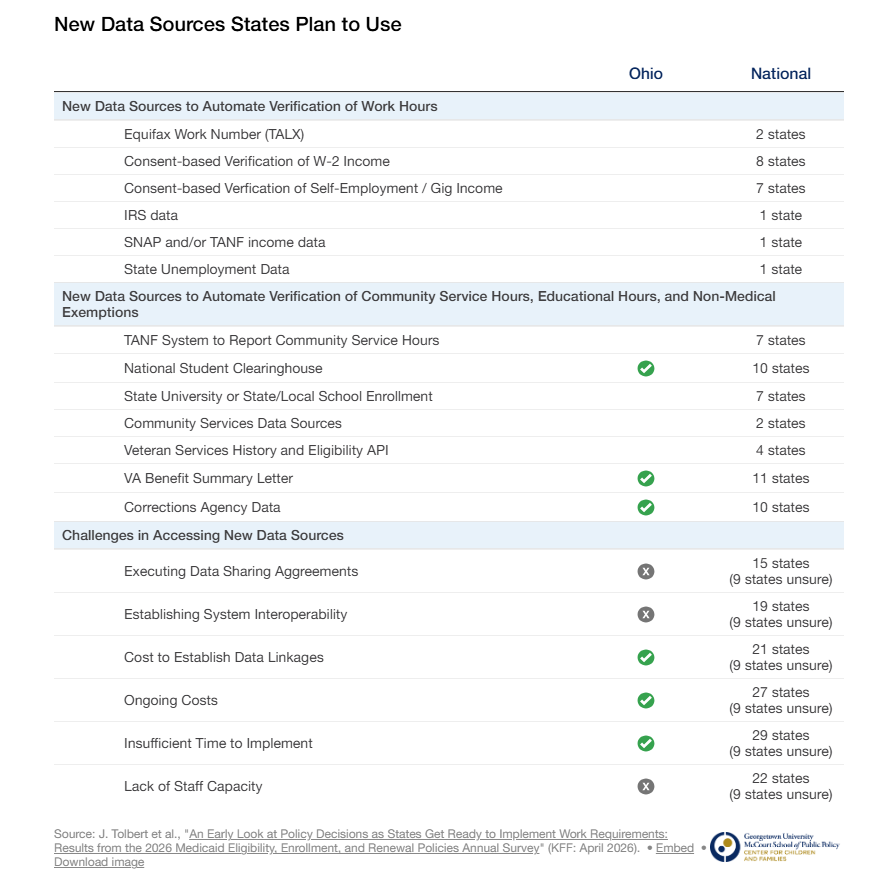
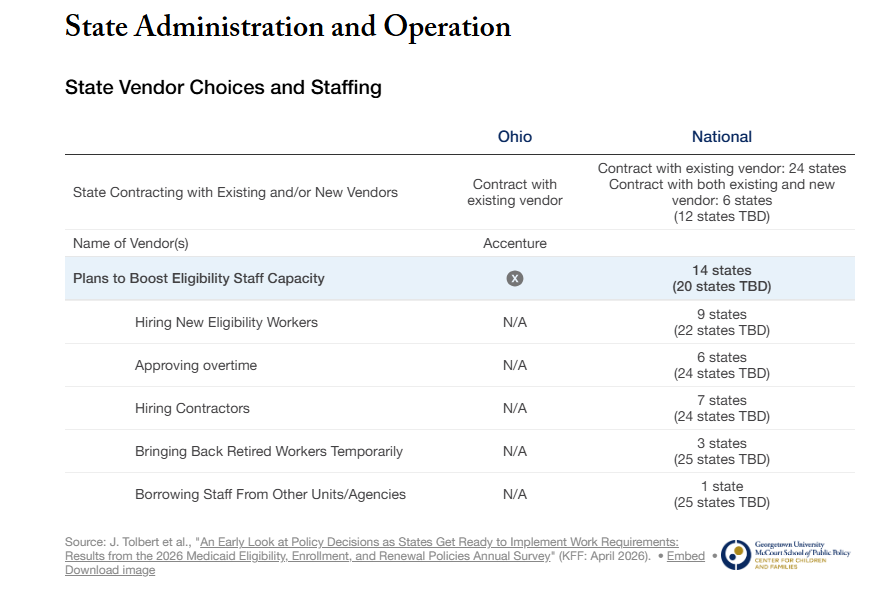
Eligibility and Enrollment System Readiness
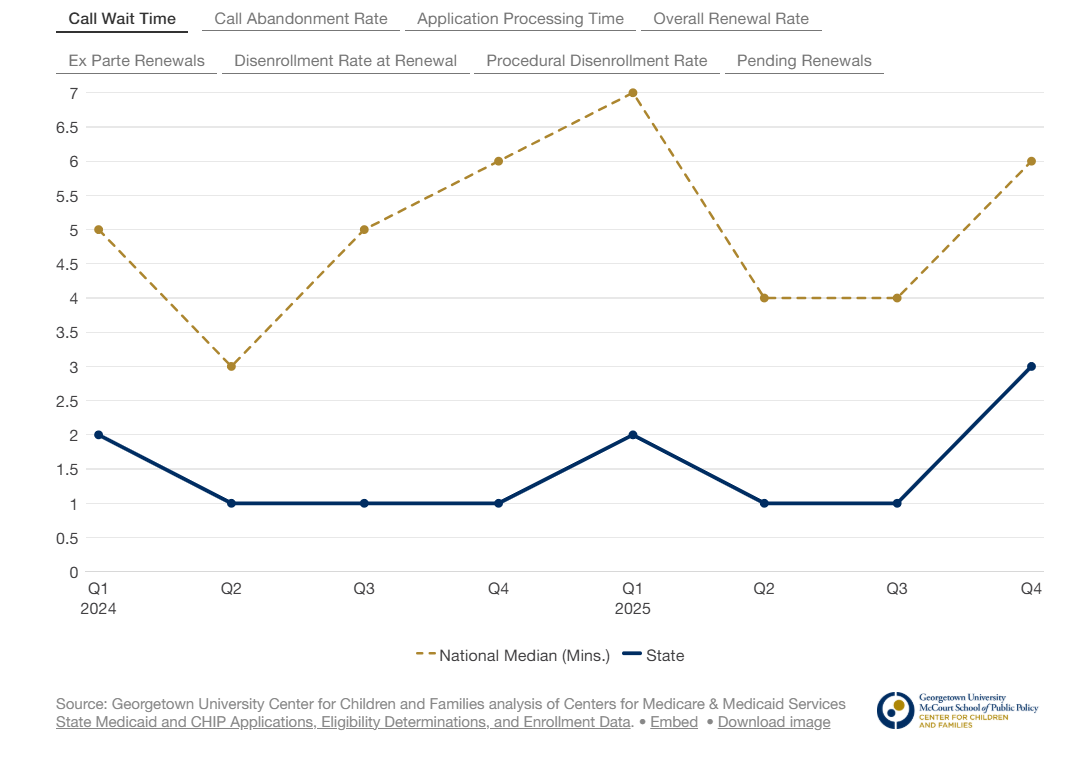
As states implement work reporting and six-month renewal policies, many may struggle to keep up with the administrative workload – workloads that already strain state systems and staff. Tracking metrics such as call center wait times, application processing times, and renewal outcomes can provide insight into system strain and a state’s readiness to implement data matching and other necessary system changes. Read more about these eight state-reported metrics in the report and the blog. See the 50-state tracker here, updated for the most recent quarter.